Gothic Music: The Aesthetics of Shadow in Harmony

If you’ve ever felt chills from a haunting bassline or experienced a strange yet comforting melancholy while listening to an icy synthesizer, you’ve likely touched upon the world of gothic music. Far from the clichés of pure sadness, this genre is a rich and complex celebration of darkness, artistry, and emotion. It’s a sonic journey where dark romanticism meets punk rebellion, creating an aesthetic that transcends decades without ever truly aging.
But what truly defines gothic music today? Is it simply a matter of makeup and black clothing, or is there a specific sonic architecture that connects these artists? Let’s delve into the depths of this fascinating movement.
From Post-Punk Origins to a Distinct IdentityGothic music wasn’t born in a ruined castle, but in the vibrant British clubs of the late 1970s. As punk began to lose momentum, some bands sought to express something more introspective, more atmospheric. This was the beginning of
Post-Punk. Bands like Joy Division , Siouxsie and the Banshees , and
Bauhaus
laid the foundations. They retained the raw energy of punk but slowed it down, adding reverb effects, prominent bass, and lyrics dealing with existentialism, fantasy literature, and human psychology.
Bauhaus’s “Bela Lugosi’s Dead” is often cited as the genre’s founding anthem. With its nine minutes of minimalist dub and references to horror films, it crystallized an atmosphere: theatrical, dark, and hypnotic.
- The sonic pillars of the genre
- Although the “goth scene” is vast, several musical elements frequently recur and define its sonic identity: The predominant bass:
- Unlike classic rock where the guitar takes center stage, gothic music often puts the bass front and center. It plays heavy, repetitive melodic lines that structure the song. Ethereal guitars:Gothic guitarists make extensive use of effects (chorus, flanger, delay) to create icy, sharp textures rather than bluesy riffs.The dramatic voice:Whether it’s the deep baritone of Andrew Eldritch (The Sisters of Mercy) or the haunting vocals of Elizabeth Fraser (Cocteau Twins), the voice is an instrument of theatricality.
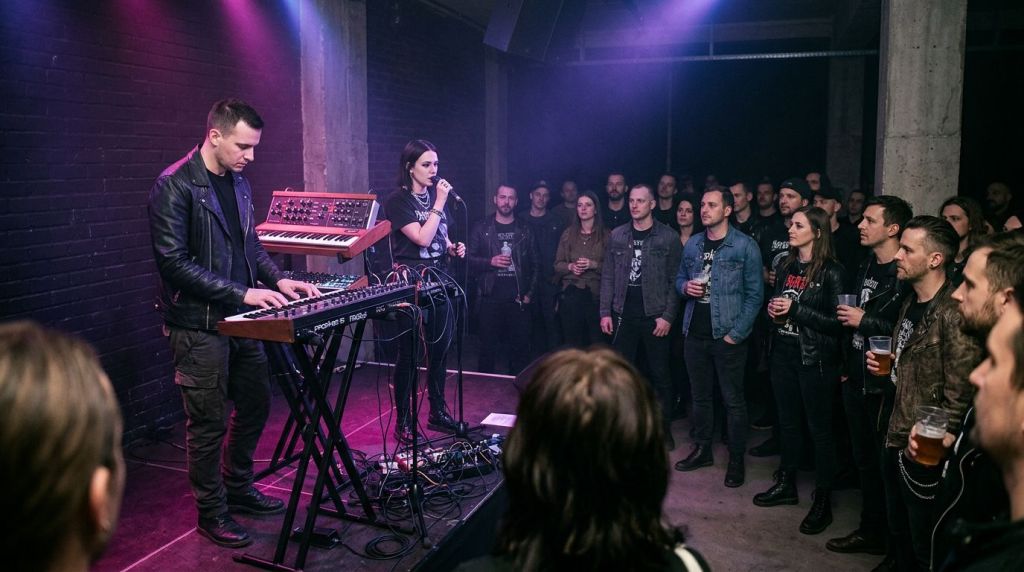
- Atmospheric synthesizers: Particularly in darkwave, keyboards add a layer of cold melancholy, evoking nocturnal landscapes. The Many Faces of the Gothic Scene
The term “gothic” has become an umbrella encompassing numerous subgenres, each with its own distinct musical character:
Gothic Rock
The classic style. Think of
The Sisters of Mercy or The Mission . It’s powerful, danceable rock, designed for smoky dance floors, with relentless drum machines.Darkwave
Here, synthesizers often replace guitars. It’s a more electronic, colder, and melancholic version, a descendant of New Wave. Bands like
Clan of Xymox are pioneers of this style. Ethereal Wave
Ethereal and dreamlike, this subgenre relies on operatic female vocals and enveloping soundscapes. It’s the perfect soundtrack for daydreaming.
Deathrock
Closer to its punk roots, Deathrock is theatrical, aggressive, and visually striking. This is the “B-movie horror” side of gothic music, embodied by
Christian Death The community: Beyond the music
What makes gothic music so enduring is the passionate community surrounding it. It’s not just a genre you listen to; it’s a culture you live. Festivals like M’era Luna in Germany or Wave-Gotik-Treffen bring together thousands of enthusiasts.
It’s also a meeting place for those who feel out of step with mainstream culture. If you’re looking to explore this community or meet people who share this particular musical sensibility, you can check out, for example: https://www.gothique.rencontre-sur-internet.info
, a space dedicated to exchanges between enthusiasts.
Why listen to gothic music in 2024? In an era often sanitized musically, gothic music offers a refreshing depth and authenticity. It allows us to explore our darker emotions without shame. It transforms sadness into beauty and anguish into art. Moreover, a new generation of artists is rediscovering these sounds. The resurgence of post-punk today (with bands like Molchat Doma and Lebanon Hanover) proves that this cold bass and mechanical rhythms still resonate deeply with the modern world. Gothic music is not dead; it is, like its iconic vampires, immortal.